
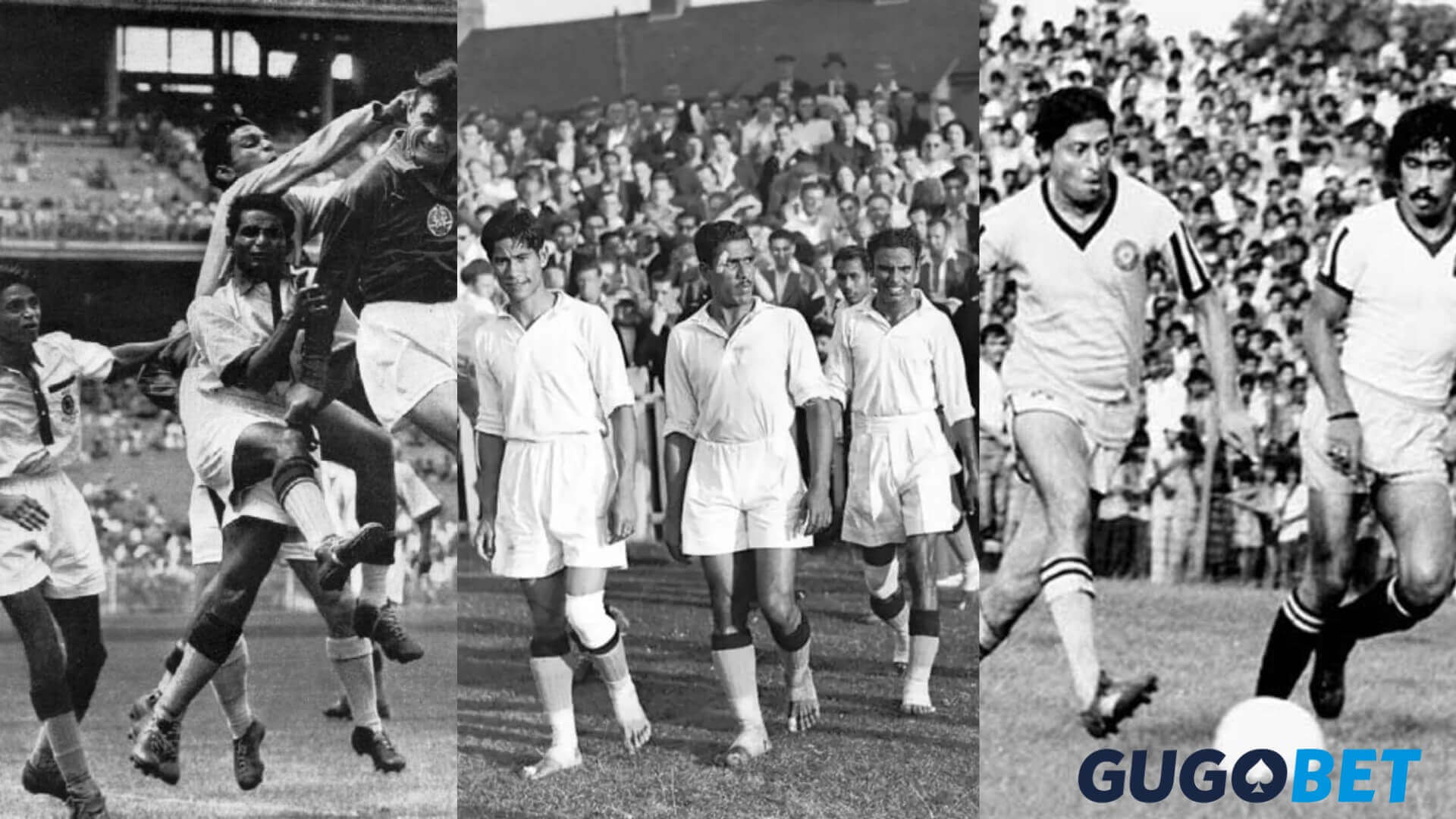
Football, also known as soccer, has a long and complex history in India. The sport was first introduced to the country during the British colonial era in the late 19th century, and quickly gained popularity among the local population. Today, football remains one of the most popular sports in India, with millions of fans and players across the country.
The Golden Era of Indian Football is a period that is widely regarded as the most successful and influential era of Indian football history. This period started in the early 1950s and lasted until the mid-1960s. During this time, India dominated the Asian football scene and made their mark on the world stage, achieving some of their greatest victories.
In this article, we will delve deeper into the Golden Era of Indian football, discussing its key players, coaches, and memorable moments. We will also explore the factors that contributed to India’s success during this period and examine how the legacy of this era continues to influence Indian football today.
History of football in India
The first official football club in India was the Calcutta FC, which was established in 1872 by British expatriates. Over the next few decades, more clubs were established in other parts of the country, and football began to gain a foothold in Indian society.
In the early 20th century, Indian football teams began to compete against British teams in official tournaments. The sport continued to grow in popularity, and by the 1930s, football had become one of the most popular sports in India.
After India gained independence from British rule in 1947, football began to take on a new significance in the country. The Indian football team was established in 1948, and made its international debut against France later that year.
Over the next few years, Indian football struggled to make an impact on the international stage. The team lacked resources and infrastructure, and struggled to compete against more established football nations. However, things began to change in the early 1950s, with the emergence of the Golden Era of Indian football.
The Golden Era of Indian football was born in 1951, when the Indian football team won the Asian Games held in New Delhi. This was the first major international tournament that India had won, and it gave a huge boost to the morale of the team and the country as a whole.
The team was led by the legendary Syed Abdul Rahim, who is widely regarded as one of the greatest coaches in Indian football history. Rahim had a keen eye for talent and was known for his tactical acumen and ability to motivate his players.
Under Rahim’s guidance, India went on to dominate Asian football for the next decade. The team won gold medals at the Asian Games in 1951 and 1962.
1951 Asian games
The 1951 Asian Games held in New Delhi, India, were a historic moment for Indian football. The Indian football team was not only hosting the games but also participating in the football tournament. The team, led by legendary coach Syed Abdul Rahim, had high hopes of winning the tournament and bringing glory to their nation.
The Indian football team’s journey at the 1951 Asian Games began with a match against Indonesia in the quarter finals. India dominated the match and went on to win 3-0. The victory set the tone for the rest of the tournament, and the Indian team gained a lot of confidence.
The next match was a semi final against Afghanistan. The Indian football team swept away the Afghans as they went on to win 3-0. This was a crucial result for India as it reserved their place in the finals of the Asian games.
The final for the gold medal was held between India and Iran. Iran was one of the best teams in the competition while India, on the other hand, had a talented team and was playing on their home ground. In the half hour mark, Legendary Indian striker, Sheep Mewalal scored the goal and put India in the driving seat. Iran tried to come back but were unsuccessful in breaching India’s solid defense.
The victory was a historic moment for Indian football, and the team was hailed as heroes by the Indian people. The 1951 Asian Games football final between India and Iran is remembered as one of the greatest moments in Indian football history. It was a significant milestone for Indian sports and helped put Indian football on the map. The victory inspired a generation of young footballers in India and showed that Indian football was capable of competing with the best in Asia.
1962 Asian games
India started their campaign in the tournament with a match against South Korea, which they lost 2-0. The loss though only inspired the team as they went on to thrash Thailand 4-1 and also further defeated Japan 2-0. With 2 wins, India finished second in their group, behind South Korea.
The semi finals was played between South Vietnam and India. The game was a nail biting contest as it had everything. With the match tied at 2-2, the iconic Chunni Goswami scored the winner in the 75th minute and sent India to the finals of the tournament.
India’s final match was against their group toppers, South Korea. The match was a highly anticipated one, and the stadium was packed with fans cheering for their respective teams. South Korea had already defeated India in the group stage, but the final was a different story.
India started the game strongly with P.K. Banerjee and J.S. Dhillon both got on the score sheet and put their country in the driving seat with an early 2-0 lead. In the second half, South Korea came back strongly and started putting pressure on the Indian defense. In the 85th minute, Cha tae-sung, scored a goal to reduce the deficit which turned out to be too little, too late.
India’s win in the football tournament at the 1962 Asian Games was a historic moment for Indian football. The team showed great character and determination throughout the competition and overcame tough opponents to lift the trophy. The victory inspired a generation of young footballers in India and helped further cement India’s place in footballing history.
Key propagators of the Golden Era
Syed Abdul Rahim, also known as the architect of Indian football, played a significant role in shaping the golden era of Indian football. Rahim was a legendary footballer, coach, and administrator who dedicated his life to the sport of football. His legacy continues to inspire football enthusiasts across the country and beyond.
After retiring from playing, Rahim took up coaching and proved to be equally adept at it. In 1950, Rahim became the coach of the Indian football team, and under his leadership, India won several major tournaments. The Indian team won the gold medal at the 1951 Asian Games, the Quadrangular Tournament in 1953, and the Colombo Cup in 1954. One of Rahim’s greatest achievements came in 1956 when India finished fourth in the Melbourne Olympics.
Rahim was a brilliant strategist and a master tactician. He believed in playing attacking football, and his teams were known for their free-flowing style of play. He was a pioneer in introducing new training methods and tactics in Indian football. He also emphasized the importance of physical fitness and discipline, which were critical for success at the international level.
Subimal (Chuni) Goswami was a prolific footballer who played a pivotal role in the golden era of Indian football. He was a versatile player who could play as a forward, winger, or midfielder. His contributions to Indian football are still remembered by football enthusiasts across the country. Born on January 15, 1938, in Kishoreganj, now in Bangladesh, Chuni Goswami grew up playing football on the streets of Kolkata. He began his football career in the junior team of Mohun Bagan and was soon promoted to the senior team. He played for Mohun Bagan for 16 years and won several trophies with the team. Goswami made his debut for the Indian football team in 1956 and went on to captain the team. He was part of the Indian team that won the gold medal at the 1962 Asian Games held in Jakarta.
Goswami was a complete footballer, known for his exceptional dribbling skills, pace, and vision. He had an uncanny ability to score goals from any position on the field. He was equally adept at setting up goals for his teammates. Goswami was also known for his leadership skills, which made him a natural choice as captain of the Indian team.
PK Banerjee was another great Indian footballer who played during the golden era of Indian football. Born on June 23, 1936, in Moynaguri, West Bengal, Banerjee grew up playing football on the streets of Kolkata. He began his football career in the junior team of Aryan Club and was soon promoted to the senior team. He played for several clubs in India and abroad, including Mohun Bagan, Eastern Railways, and the Indian Railways.
Banerjee made his debut for the Indian football team in 1955 and went on to captain the team. He was part of the Indian team that won the gold medal at the 1962 Asian Games held in Jakarta.
Banerjee’s influence on Indian football was not limited to his playing career. After retiring from football, he went on to become a coach and sports administrator. He served as the coach of the Indian football team. He also coached several clubs in India, including East Bengal and Mohun
Bagan.
Tulsidas Balaram was another legendary footballer who played a significant role in the golden era of Indian football during the 1950s and 1960s. He was known for his exceptional ball control, dribbling skills, and goal-scoring ability. He was part of the Indian team that won the gold medal at the 1962 Asian Games. Balaram was known for his outstanding technique and vision on the field. He was an excellent dribbler and had the ability to score goals from any position on the field.
In the defense, Jarnail Singh was a towering defender who played for the Indian national team between 1951 and 1962. He was a part of the team that won the gold medal at the 1962 Asian Games and was known for his physicality, aerial ability, and excellent reading of the game.
Conclusion
The golden era of Indian football between the 1950s and 1970s was a period of significant success and achievement for the Indian national team. During this time, India produced some of its greatest footballers and enjoyed significant success on the international stage.
The success of Indian football during this period can be attributed to several factors. One of the key factors was the quality of players produced by India during this time. Players like Chuni Goswami, PK Banerjee, Tulsidas Balaram, and Jarnail Singh were not only talented footballers but also exceptional role models who inspired a generation of young Indian footballers.
Another important factor was the tactical acumen of coaches like Syed Abdul Rahim, who played a crucial role in shaping the Indian national team during this period. Rahim’s ability to motivate his players and his tactical innovations helped India achieve significant success on the international stage.
However, despite the success of Indian football during the golden era, the sport has struggled to maintain its position in Indian society. In recent years, football has taken a back seat to cricket, which has become the most popular sport in India.
The lack of investment in the sport, the absence of a professional league, and the failure to produce quality players are some of the factors that have contributed to the decline of Indian football in recent years.
However, there are signs that Indian football is on the rise again. The Indian Super League (ISL), launched in 2014, has provided a platform for Indian footballers to showcase their talent, and the league has attracted international players and coaches, raising the profile of the sport in India.
In addition, the success of the Indian national team in recent years, including a win over Thailand in the 2019 AFC Asian Cup, has generated renewed interest in the sport and raised hopes that Indian football can once again achieve significant success on the international stage.
In conclusion, the golden era of Indian football was a period of significant success and achievement for the Indian national team. The quality of players, the tactical acumen of coaches, and the support of the government and the IFA were all crucial factors that contributed to the success of Indian football during this period. While Indian football has struggled in recent years, there are signs that the sport is on the rise again, and the legacy of the golden era of Indian football continues to inspire young footballers in India.
Football Betting in India
Anyone can join football and have fun easily by betting on football, players can choose to bet on personal performances, team’s winning and more! Explore all details on GUGOBET, where you can find the best odds and the trustworthy betting environment!